Home » Designing mental health environments that work with people, not against them
Creating better spaces for well-being
Discover how thoughtful design impacts lives.
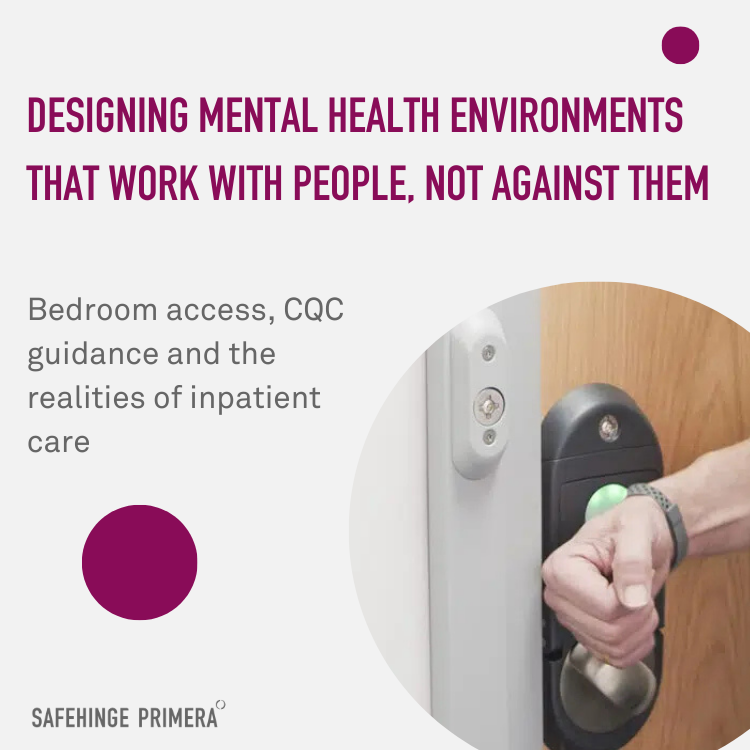
Designing mental health environments goes beyond simply meeting guidance. The goal is to create spaces that remain calm and supportive, even when the ward is busy. Spaces that protect privacy without compromising safety. Doors that work quietly, reliably, every day.
The Care Quality Commission has been increasingly clear about the direction of travel. Services are expected to provide single-occupancy bedrooms wherever possible, giving people a private space where they can withdraw, rest and feel safe.
As the CQC notes in its guidance on inpatient mental health environments:
“Patients should have access to a bedroom that they can use as their own personal space, where they feel safe and can maintain privacy and dignity.”
At the same time, services must maintain safety and oversight. Under Regulation 15, security arrangements must protect people while ensuring restrictions remain lawful, proportionate and the least restrictive option available
Balancing those expectations is rarely straightforward in practice.
Architects are safeguarding therapeutic design intent while responding to compliance requirements and budgets. Estates teams are responsible for systems that must perform reliably for years. NHS Trust leaders must demonstrate governance, inspection readiness and patient safety.
And all of that converges at the bedroom door.
Why Bedroom Access Matters So Much
For a patient, a bedroom is often the only personal space available. The ability to close and lock that door can restore something fundamental: a sense of control.
In a recent webinar, lived experience advocate Katherine Lazenby shared her powerful story about navigating inpatient behavioral health care. She highlighted how design can deeply influence emotions, especially when it comes to doors:
Katherine’s insights are a reminder that we must balance safety with autonomy. At Safehinge Primera, our mission is to design products that don’t just protect patients but also support their recovery journey—helping them feel safe, respected, and empowered.
“Doors represented my loss of freedom and control. They became emotional thresholds. Locked doors created feelings of disempowerment and isolation.”
Bedroom Access Features
Balancing patient needs with clinical requirements.
Promoting Dignity and Privacy
Ensures patient comfort and a sense of personal space.
Reducing Anxiety
Creates a calming environment, crucial for recovery.
Enhancing Rest and Stability
Supports better sleep patterns and emotional well-being.
Traditional mechanical locking systems often introduce quiet but persistent problems. Keys are lost. Components wear down under constant use. Overrides lack visibility. Audit trails are non-existent.
Over time, that friction builds.
Staff lose confidence in the system. Estates teams absorb reactive maintenance. And when inspection comes, evidencing lawful, proportionate access can become harder than it should be.
In a safety-critical environment, the bedroom door should reduce stress, not add to it.
How Our Electronic Lockset Supports CQC Recommendations
We designed our electronic lockset specifically for mental health environments — not adapted from commercial settings, but built around the realities of inpatient care.
Patients can independently secure their bedroom, reinforcing autonomy and aligning with CQC’s emphasis on privacy and single-room accommodation. The interaction is intuitive and reassuring, not technical or intrusive.
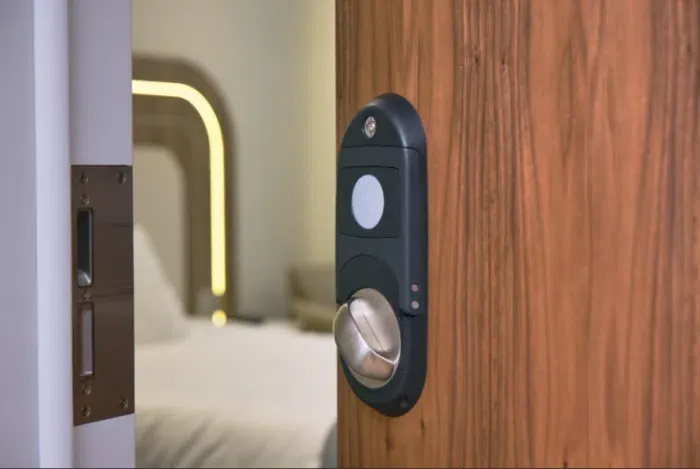
Authorised staff can override access when clinically required, with clear role-based permissions andmeans evidence gathering: Evidence you can rely on in inspection, safeguarding review, or serious incident investigation.That transparency supports governance under Regulation 15 and provides inspection-ready assurance.
“We’ve had really positive feedback from CQC on the new doors. They were supportive not just of the safety and anti-barricade design, but also of how practical the technology is and how it supports patient wellbeing and recovery.”
Marc Sycamore, UK Operations Director, Nightingale Hospital
The system also integrates with wider fire and life safety strategies, ensuring security never compromises emergency egress. And because it reduces the wear associated with traditional mechanical locks, it supports long-term reliability.
Designed for Architects, Estates Teams and NHS Trusts
For architects and designers, specifying access control should feel like a confident decision, not a risk. You need solutions that support anti-ligature design, align with guidance and maintain a therapeutic feel.
For estates teams, reliability and integration matter just as much as compliance. Systems must perform under pressure and stand the test of time.
For NHS Trusts, it’s about assurance. Demonstrating that privacy, safety and lawful access control sit comfortably together.
When bedroom doors behave predictably under pressure, staff stop thinking about the hardware and focus on care.The ward feels calmer. Staff feel supported. Patients feel respected.
And that’s what good design should always achieve.
See how the system works in practice
If you’re planning a new build, refurbishment or reviewing your bedroom specification, our design specification team can walk through how modern electronic locksets support CQC expectations and ward safety.
Book a short product demonstration with one of our design specification managers.
Sometimes the most powerful design decisions are the ones that quietly make everything work better.
Latest News
Discover our latest insights and industry trends.